
Ozone loss was a thing even before CFCs were widely used
With today’s scientific tools, the problem could have been spotted in the 1950s.
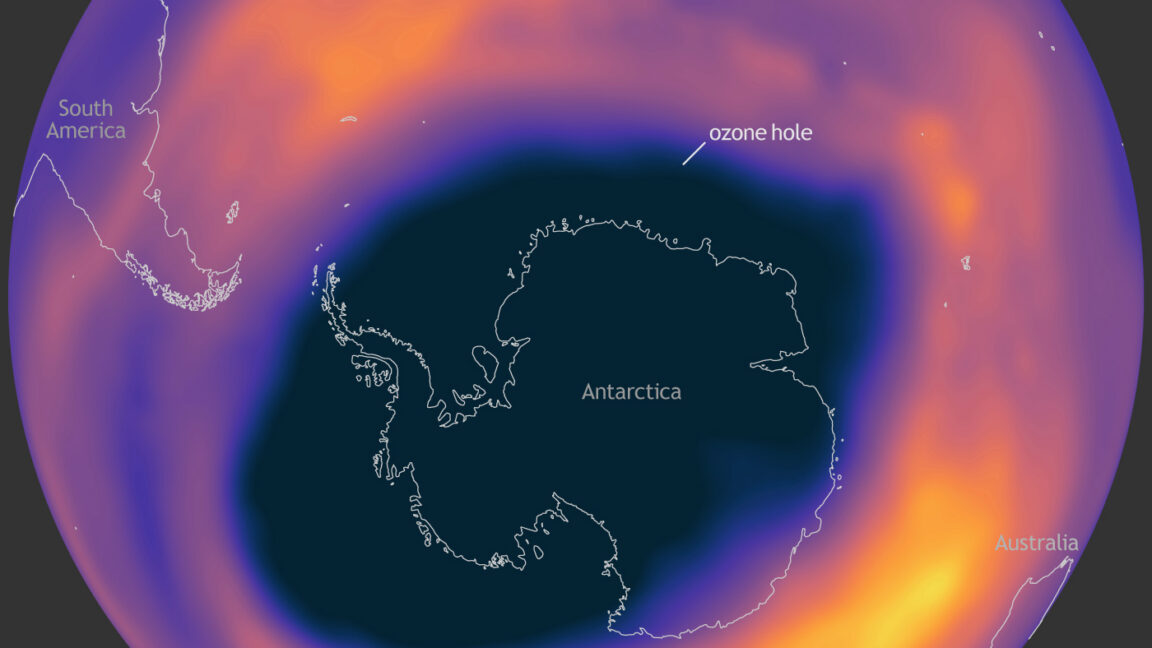
The ban on ozone-depleting substances that successfully reversed the growth of the hole in the ozone layer isn’t seen as a missed opportunity. On the contrary, the quick global response is one of the best cases of common-sense environmental action. But what if it could have been done even earlier?
The fact that chlorofluorocarbons (CFCs)—chemicals once common in aerosol cans and refrigerant loops—could destroy ozone in the atmosphere was discovered in 1974. Within just a few years, bans on CFCs began to roll out based on the projected consequences. The seasonal ozone “hole” discovered over Antarctica in 1985 pushed things along even faster, and in 1987 an international agreement was signed to phase out CFCs everywhere.
A new study led by Jian Guan at MIT asks an interesting what-if question: Would it have been possible to detect this problem even sooner with today’s scientific tools?